
What Ayurveda Sees Beyond the Rash
By Nina Fine, Ayurvedic Doctor (AyD)
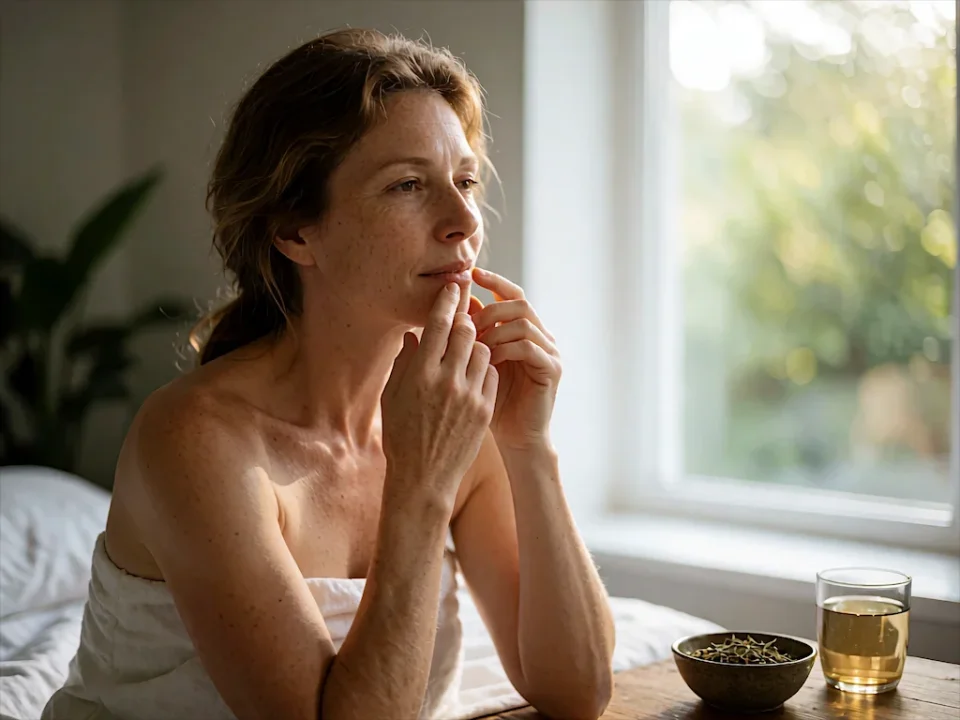
By Nina Fine, Ayurvedic Doctor (AyD) and licensed esthetician
If you're dealing with small, red bumps around your mouth, nose, or chin, you may have heard the term perioral dermatitis. It's a common skin imbalance that can feel confusing and frustrating, especially when it keeps coming back. As a licensed esthetician and Ayurvedic Doctor (AyD), I look at perioral dermatitis a little differently than most skincare counters do. I want to share what Ayurveda sees beyond the rash itself.
What Is Perioral Dermatitis?
Perioral dermatitis shows up as small bumps, redness, and sometimes flaking around the mouth area. It can spread toward the nose or eyes. Many people mistake it for acne or an allergic reaction at first. It tends to be sensitive to touch and can feel tight or mildly itchy.
Conventional skincare often looks at triggers like heavy creams, certain toothpaste ingredients, or steroid use. These are real and worth paying attention to. But in my practice, I also ask a deeper question: what is going on inside the body that shows up on the skin?
For more on this, see Why Your Skincare Routine Isn't Enough: What an Ayurvedic Doctor Sees That Most Facials Miss, Why Kitchari Is the First Thing an Ayurvedic Doctor Recommends for Clearer Skin This Spring, Perioral Dermatitis and Digestion: An Ayurvedic Perspective.
The Ayurvedic View: Looking Beyond the Skin
In Ayurveda, skin is never read on its own. It's seen as a mirror of digestion, daily habits, and the balance of three doshas: Vata (wind), Pitta (fire), and Kapha (earth). When one of these is out of balance, it can show up on the face long before you notice anything else.
From an Ayurvedic perspective, perioral dermatitis is often linked to irritation and heat near the surface of the skin, paired with a buildup of what's traditionally called Ama. Ama means undigested residue — a concept from Ayurveda, not a medical diagnosis. It's the idea that when digestion isn't working smoothly, the body can't fully process what it takes in, and this shows up as inflammation on the skin.
Vata, Pitta, and Kapha and Your Skin
Each dosha tends to show up differently on the skin. Vata imbalance often looks like dryness, flaking, and fine sensitivity. Pitta imbalance tends to bring redness, heat, and irritation. Kapha imbalance can show up as congestion or puffiness. Most people carry a mix of these, but one often leads. Understanding your own pattern is the starting point of The Skin Dosha Method™, the framework I use with every client who walks through our doors here in Natick.
Common Triggers Through an Ayurvedic Lens
In Ayurveda, perioral dermatitis is linked to several factors working together, not just one single cause. Heavy or rich herbal formulations used too often near the mouth may aggravate Pitta. Irregular eating habits, skipped meals, or rushed meals can affect digestion and contribute to Ama. Stress and overstimulation can also unsettle Vata, which shows up as sensitivity and reactivity in the skin.
None of this means you did something wrong. It simply means your skin is asking for a different kind of attention — one that looks at the whole picture, not just the surface.
Not sure which skin type you are? Take the free 2-minute quiz, or read more about The Skin Dosha Method™.
The Skin Dosha Method™: A Root Cause Approach
When a client comes to me with a redness-prone, bump-covered area around the mouth, I don't just look at what herbal formulation might calm it. I ask about digestion, sleep, stress, and routine. This is the heart of The Skin Dosha Method™. It's built on the idea that skin reflects what's happening on the inside, and that lasting change starts with understanding root cause, not just managing symptoms.
This doesn't replace what your dermatologist may recommend. It works alongside it, offering another layer of insight into why your skin may be reacting the way it is.
Supporting Your Skin at MySelf Ayurvedic Spa
At MySelf Ayurvedic Spa in Natick, MA, I offer facial treatment protocols designed to calm redness-prone, reactive skin without overwhelming it. These sessions are gentle by design, since skin dealing with perioral dermatitis needs a light touch, not heavy intervention.
I also talk with clients about Kitchari, a nourishing meal of mung beans, rice, and mild spices that's traditionally used to support digestion. A short kitchari program can be a gentle way to give your digestion a break, which in Ayurveda is closely tied to skin balance. If you're curious about a traditional cleanse, that's a separate, supervised practice I can walk you through — it's not something I'd ever suggest as a stand-alone skin remedy, and it's not right for everyone.
For clients who want to explore calming support for Vata, I may also talk about Shirodhara, a calming oil therapy for the scalp and forehead. It's not a fix for perioral dermatitis, but many clients find it supports a sense of ease, which can matter when stress is part of the picture.
If you take any herbal formulation I recommend by mouth, please check with your provider first, especially if you're pregnant, nursing, or managing a health condition.
Let's Look at Your Skin Together
Perioral dermatitis can feel isolating, especially when it doesn't respond the way you expect. I believe your skin is always trying to tell you something, and I'd love to help you listen to it. Using The Skin Dosha Method™, we'll look at your dosha, your digestion, and your daily rhythms to understand what your skin might be asking for.
If you're in Natick or nearby and want to start this healing journey, I invite you to book a consultation at MySelf Ayurvedic Spa. Let's look beyond the rash together and find a path that feels right for you.
For educational purposes only. Not medical advice. This article reflects Ayurvedic practice at MySelf Ayurvedic Spa. It is not a substitute for care from a physician or dermatologist. Ayurvedic care is complementary. Stop any product that burns, itches, swells, or breaks you out in new places, and see a dermatologist if a reaction spreads or is painful. If you are pregnant, nursing, managing a condition, or taking medication, talk with your provider before changing food, herbs, or cleanses.
© 2026 Nina Fine. The Skin Dosha Method™ is a trademark of Nina Fine.
Ready for the next step? Book your Skin Dosha Method™ consultation — call (339) 208-1788 or book online. Not sure of your type yet? Take the free 2-minute quiz.
Tags
Ready to Experience Ayurvedic Care?
Start with a short skin quiz from Nina Fine, or book a personalized consultation.