
The Skin Dosha Method™ Your skin is more than dry, oily or sensitive.
Four skin types describe what your skin is doing on the surface. The Skin Dosha Method™ names which of ten types is driving it, and what to do about it, in what order.
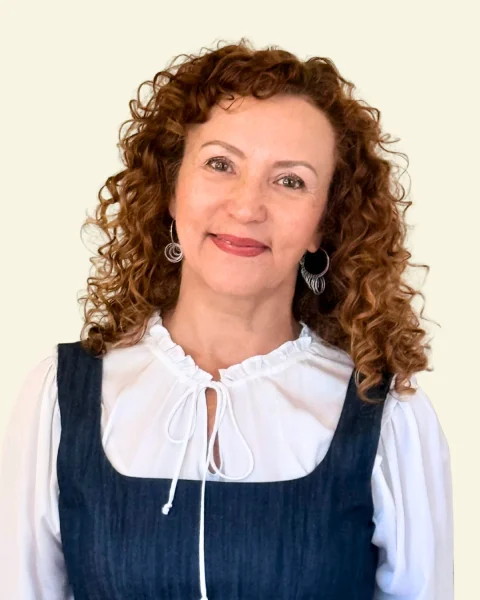
Created by Nina Fine, Ayurvedic Doctor (AyD) and licensed esthetician in Massachusetts, not a medical doctor, with 4,500+ hours of training. Natick, Massachusetts.
Four skin types describe. Three doshas explain. Ten do both.
Most estheticians sort skin into four types: dry, oily, normal or combination, and sensitive. Those words describe the surface today. They do not say why your skin behaves that way, which is how two people with "sensitive" skin follow the same advice and get opposite results.
Ayurvedic practitioners work with three doshas: Vata, Pitta and Kapha. The doshas are the Ayurvedic reading of the pattern. But classical Ayurveda described skin diseases in detail and never set out skin types, and few faces are one dosha alone.
The Skin Dosha Method™ joins the two: an esthetician's eye for the surface and an Ayurvedic reading of the pattern behind the surface.
| System | Types | What it reads | What you get from it |
|---|---|---|---|
| Standard skin typing | 4: dry, oily, normal or combination, sensitive | Oil, moisture and reactivity on the surface | Product advice for the surface |
| The three doshas | 3: Vata, Pitta, Kapha | The constitution of the whole person | Broad food and lifestyle guidance, not specific to your skin |
| The Skin Dosha Method™ | 10 | Which dosha leads in your skin, and which follows | Skin care, food and daily habits matched to your type, in the right order |
What is a dosha?
In Ayurveda, a dosha is the traditional name for a pattern of qualities in the body and skin. It is an Ayurvedic description, not a medical one. There are three: Vata, Pitta and Kapha. Each is made of two of the five elements and has its own recognizable qualities. Everyone has all three, but one or two usually lead.
| Dosha | Elements | Main qualities | In the skin |
|---|---|---|---|
| Vata | Air + Space | Dry, light, cold, mobile, rough, subtle | Dryness, fine lines, tightness |
| Pitta | Fire + Water | Hot, sharp, light, liquid, slightly oily, spreading | Redness, heat, inflammation, sensitivity |
| Kapha | Earth + Water | Heavy, cold, moist, soft, dull, steady | Oiliness, thickness, large pores, congestion |
The ten skin types
Three types where one dosha leads alone. Six pairings, where the order matters. One where all three are disturbed.
-
01
Dune
Vata
Dry & Fragile
- Dry all over; tight after washing
- Fine crinkly lines, like tissue paper
- Runs cool, never flushes
-
02
Savanna
Vata–Pitta
Slightly Dry & Sensitive
- Dry most days, cheeks especially
- Goes bright red, fades within the hour
- Small pimples, blackheads, whiteheads
-
03
Ember
Pitta–Vata
Sensitive, Inflamed & Reactive
- Dry cheeks, oily forehead and nose
- New products sting and feel tight
- Inflamed bumps, mostly without pus
-
04
Wildfire
Pitta
Irritated & Redness-Prone
- Oily forehead and nose; normal cheeks
- Goes red and stays red most days
- Red, angry bumps; face looks inflamed
-
05
Geyser
Pitta–Kapha
Combination & Breakout-Prone
- Oily T-zone, cheeks slightly oily
- Red bumps with pus, the odd cyst
- Marks left after a pimple heals
-
06
Volcano
Kapha–Pitta
Oily & Acne-Prone
- Oily all over the face
- Large, painful cysts
- Large pores wherever skin is oily
-
07
Lagoon
Kapha
Oily & Plump
- Very oily; skin feels thick
- Very large, deep pores
- Rarely breaks out, smoother than most
-
08
Stillwater
Kapha–Vata
Sluggish & Congested
- Oily cheeks; forehead normal or dry
- Clogged bumps and lots of blackheads
- No spots, but dull or gray
-
09
Frost
Vata–Kapha
Oily Yet Dehydrated
- Oily by midday, but tight after washing
- Small pores, larger on inner cheeks
- Deep lines, sooner than expected
-
10
Storm
Tridoshic
All Three Disturbed
- None of the above quite fits
- The picture keeps changing
- Different skin in different seasons
Same two doshas. Different skin.
Most skin shows two doshas, and one of them leads. The leading dosha is what your skin does most days, and it is what we address first. The secondary dosha is what shows up under stress, a change of season or the wrong product, and it sets the limits on how we address the first.
Reverse the order and you have a different skin type that needs different care. Savanna and Ember are both Vata and Pitta. They are not the same skin.
| Savanna (Vata–Pitta) | Ember (Pitta–Vata) | |
|---|---|---|
| What leads | Dryness | Heat |
| What follows | Heat | Dryness |
| Oil and moisture | Dry most days, cheeks especially | Dry cheeks, oily forehead and nose |
| Redness and reactivity | Goes bright red, fades within the hour | New products sting and feel tight |
| Breakouts | Small pimples, blackheads, whiteheads | Inflamed bumps, mostly without pus |
| Addressed first | The dryness, without adding heat | The heat, without drying the skin further |
This is why advice written for "dry, sensitive skin" helps one of them and sets the other back. Knowing only that you are "Vata and Pitta" is not enough. You need to know which one leads.
What your type decides
Your type is not a label. It is the starting point for every recommendation I make.
- What to address first. The leading dosha comes first, and the secondary one tells me what to avoid while we do it.
- What goes on your skin. Which ingredients and textures suit your type, and which are quietly working against it.
- What you eat, and how you digest it. Food notes are traditional Ayurvedic education matched to the type, not a digestion treatment.
- Your daily habits. Sleep, stress, movement and routine all move the doshas, and your skin follows.
- How it changes. The same type needs different care in a New England winter than in August, and at 30 than at 55.
This is why The Skin Dosha Method™ is not a product routine. Skin care is one part of it. Food, digestion and daily habits are the rest.
Two minutes to your likely type
Answer a few questions about how your skin looks, feels and reacts. You get your likely type at the end, free.
The Skin Dosha Method™ Consultation & Protocol
Your type, read and confirmed, and the written protocol that follows from it. 60 minutes with Nina Fine. $197.
We go through your skin history, digestion, sleep, stress and everything you are currently putting on your face, and I read your skin as it is now. You leave with your type confirmed, the pattern behind it named, and a protocol built for that type.
Included:
- A 60-minute private video session with Nina Fine, Ayurvedic Doctor (AyD) and licensed esthetician in Massachusetts, not a medical doctor
- Your Skin Dosha Method™ type, confirmed by intake and observation, not a quiz result on its own
- Your written protocol within 3 business days: morning and evening routine, the ingredients that suit your type and the ones working against it, food and digestion guidance, and daily habits
- A clear sequence: what to change first, what to leave alone, and how to judge whether your skin is tolerating it
- Product suggestions at several price points; nothing you have to buy from me
- Take the quiz (opens in new tab)
- Book the consultation
- Receive your written protocol within 3 business days
Common questions
Is the quiz enough on its own?
The quiz points you to a likely type. The consultation confirms it. History and observation catch what a questionnaire cannot, especially with combination skin and skin that keeps shifting. The consultation confirms a Skin Dosha type. It does not diagnose rosacea, acne, or any other condition.
I already know my dosha. Why do I need this?
Your body's dosha and your skin's type are not always the same, and knowing two doshas does not tell you which one leads in your skin. That order changes the care.
What if none of the ten sounds like me?
That is its own type, Storm, and it is one of the most useful ones to have named properly.
Do I have to buy specific products?
No. Much of what matters is sequence, technique, food and habit, not what is in the bottle.
Is this medical care?
No. This is personalized guidance in skin and Ayurvedic health. If you need a diagnosis or a prescription, see your physician. I am glad to work alongside them.
This is educational guidance in the Skin Dosha Method and Ayurvedic tradition. It is not medical care, not a diagnosis, and not a substitute for a physician or dermatologist. Ayurvedic Doctor (AyD) is a California Ayurvedic credential, not a medical license. Nina Fine is also a licensed esthetician in Massachusetts. Stop any product that burns, itches, swells, or breaks you out in new places, and see a dermatologist if a reaction spreads or is painful. If you are pregnant, nursing, managing a condition, or taking medication, talk with your provider before changing food or herbs.
© 2026 Nina Fine. The Skin Dosha Method™ is a trademark of Nina Fine.
Ten skin types. One is driving yours.
Your type, read and confirmed, and the written protocol that follows from it. 60 minutes with Nina Fine. $197.